Gas metering

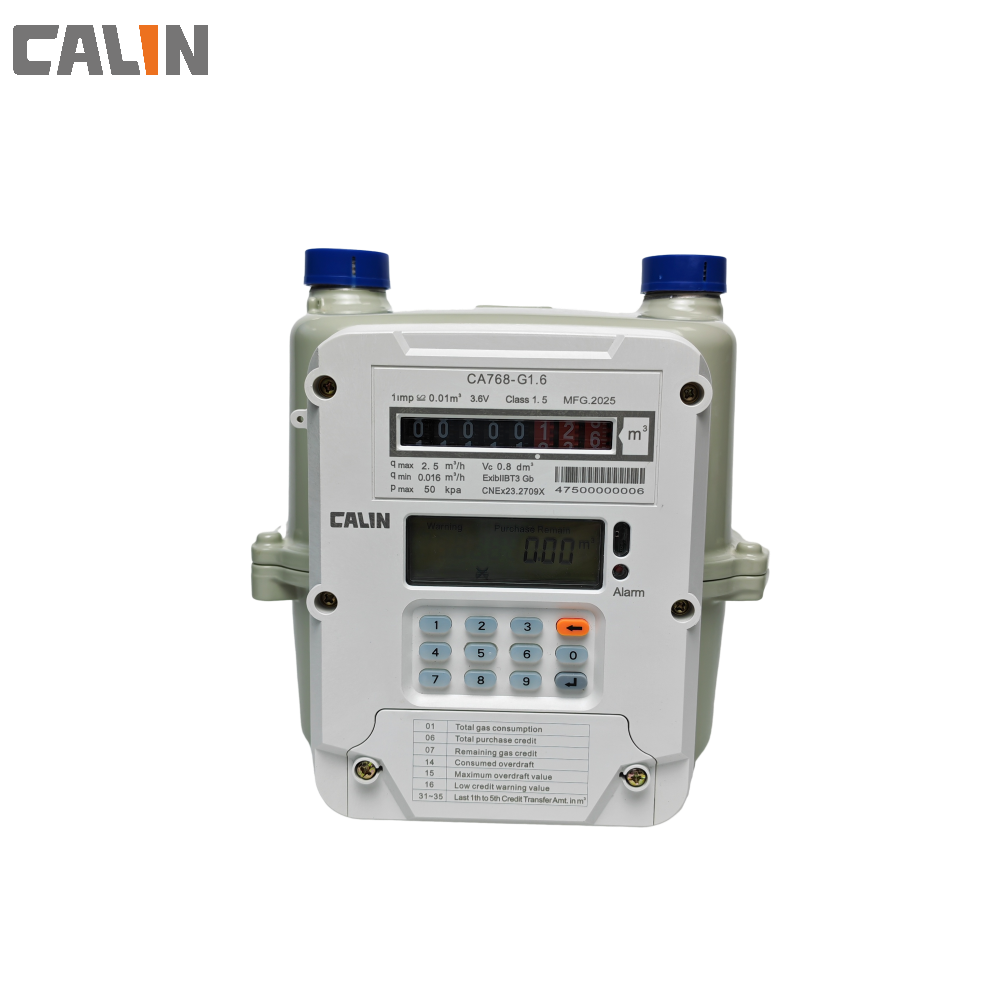
STS Prepaid Gas Meter with Token Prepayment and Remote Reading

Direct answer

An STS prepaid gas meter deducts purchased credit and uses a 20-digit token for recharge. The CalinMeters CA768-K02 datasheet lists G1.6, G2.5 and G4 diaphragm-meter options plus optional LoRaWAN, NB-IoT, GPRS or 3G communication. Final selection requires the gas service, flow, pressure, valve workflow, customer interface and destination requirements.

The CA768-K02 combines a diaphragm gas meter, prepaid token entry, credit alerts and optional remote communication. Gas projects are safety- and market-specific, so this page separates published product facts from the service conditions, procedures and documentation that the buyer must confirm before a pilot.

STS prepaid gas meter from CalinMeters

Published models

Compare available configurations

Open a model page for published specifications, application guidance, the current PDF and the project details that still need confirmation.

Buyer selection guide

How to specify an STS prepaid gas meter

1

Define the gas service

State the gas type, meter class, nominal and maximum flow, working pressure, installation orientation and ambient conditions.

2

Document valve operation

Define low-credit behavior, valve close and reopen rules, emergency procedures and customer-support responsibilities.

3

Choose customer recharge access

Confirm where the meter will be installed and whether customers use its keypad directly or need a separate interface indoors.

4

Select remote communication

Choose LoRaWAN, NB-IoT, GPRS or 3G only after reviewing coverage, gateway or SIM responsibility, backhaul and reporting needs.

5

Confirm market requirements and pilot

Identify the utility specifications, approvals, test documents, installation procedures and pilot acceptance criteria required in the destination market.

STS workflow

How prepaid gas token recharge works

The vending workflow links a customer purchase to a registered gas meter. Communication can support remote reading, but token issue, customer entry and valve procedures must be documented for the specific gas utility project.

  1. 1. Register the customer meter

    The operator configures the meter identity, vending relationship and gas-service rules.

  2. 2. Purchase gas credit

    The customer pays through an approved sales or payment channel.

  3. 3. Generate and enter the token

    The vending system issues a 20-digit token for entry on the meter keypad or configured customer interface.

  4. 4. Apply the operating procedure

    The meter updates credit and follows the configured low-credit and valve workflow; staff handle exceptions under the utility procedure.

Buyer questions

Frequently asked questions

How should a utility choose a prepaid gas meter?

Choose a prepaid gas meter only after confirming the gas service, meter size and flow requirement, installation environment, valve operation, customer recharge method, remote reading requirement, and destination-market standards. The CA768 combines STS token prepayment with LoRaWAN communication, but the final configuration should be checked against the local utility specification and a representative pilot.

Why use LoRaWAN for a prepaid gas meter project?

LoRaWAN is useful when many gas meters are installed in one service area and the operator needs remote reading without a cellular subscription in every meter. Practical coverage depends on building materials, meter location, gateway placement, terrain, and local radio conditions, so the network should be validated with a site survey and pilot.

What information is needed for a prepaid gas meter quotation?

Provide the gas type and service conditions, required meter size and flow range, installation orientation and environment, valve and STS prepayment requirements, keypad or customer interface requirement, LoRaWAN network and gateway plan, estimated quantity, destination country, required utility specifications or approvals, and pilot acceptance conditions.

How does a token based prepaid meter work?

A token based prepaid meter uses STS security to load credit before consumption. The operator registers the meter in a vending system, the customer buys credit, the system generates a secure 20-digit token, and the customer enters that token on the meter keypad or CIU. Remote recharge can also be supported when the project uses GPRS, LoRaWAN, or AMI integration.

Does a prepaid meter have to come with a SIM card?

No. The basic technology used in prepaid meters is STS (Standard Transfer Specification), a secure message system that does not require internet. The sales point encrypts credit information to generate a 20-digit token, which the user enters via the meter keypad to recharge. A SIM card is only needed for remote meter reading or remote management functions.

Project inquiry

Discuss STS prepaid gas meter

Send the service conditions, communication plan, quantity, destination requirements and pilot criteria. CalinMeters can then review the published models against your project.